La composizione polifonica. Introduzione alla tecnica contrappuntistica vocale del XVI secolo
La composizione polifonica. Introduzione alla tecnica contrappuntistica vocale del XVI secolo
A practical introduction to sixteenth century vocal counterpoint, focused on Renaissance polyphony, voice leading, imitation, and the craft of composing in historical style.
Book Description
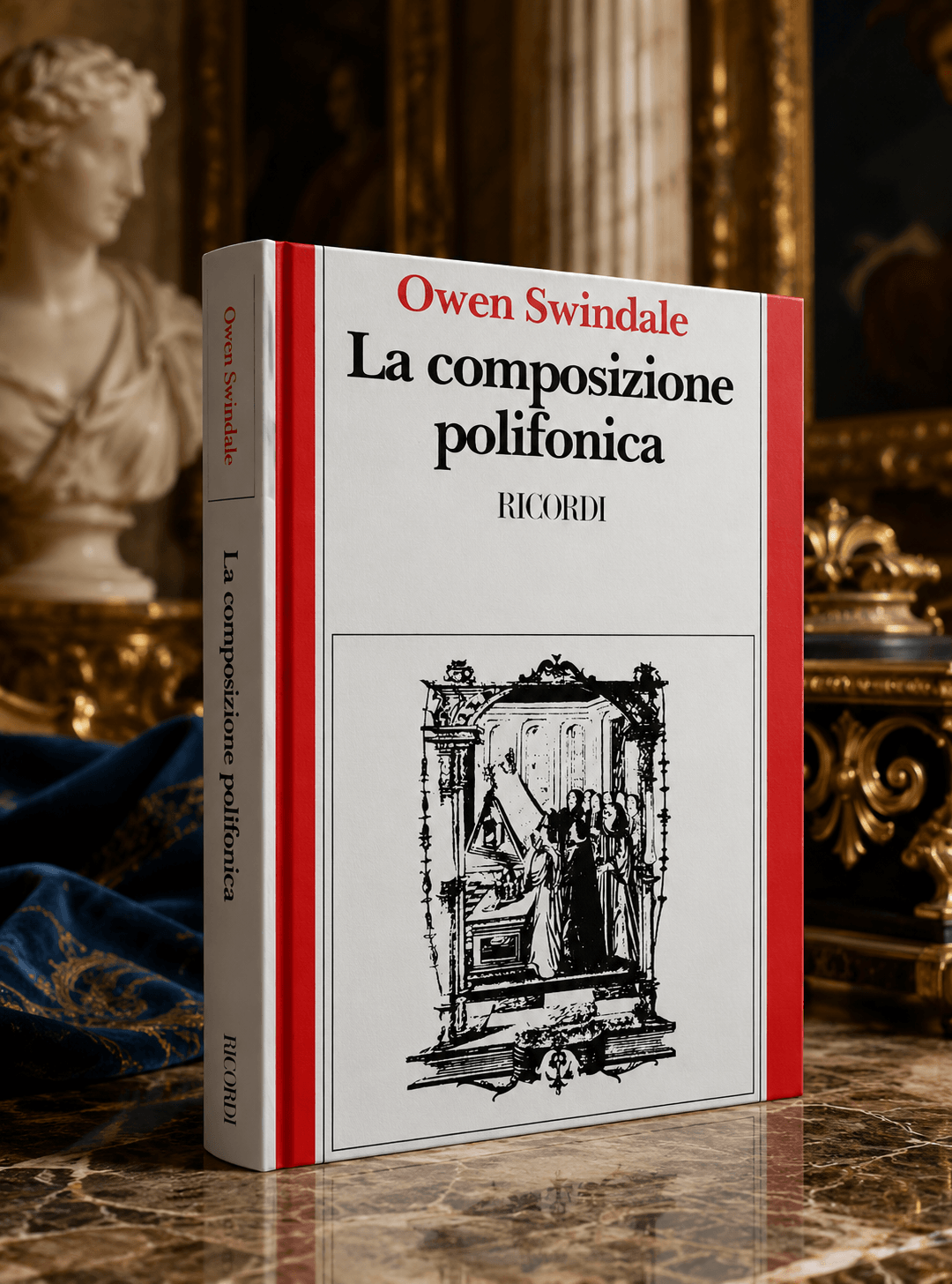
La composizione polifonica by Owen Swindale is a concise and practical guide to sixteenth century vocal counterpoint, Renaissance polyphony, voice leading, imitation, and polyphonic composition. Translated into Italian by Anna Maria Morazzoni, the book introduces the craft of writing in a Renaissance vocal style through clear principles and musical examples. It is especially useful for students, teachers, and composers who want to understand how independent melodic lines can combine into a balanced, singable, and historically informed contrapuntal texture.
Who this book is for?
This book is ideal if you want to:
Study Renaissance counterpoint in a practical way.
Write vocal polyphony with clearer technique.
Understand sixteenth century style from inside.
Improve voice leading and contrapuntal control.
Build stronger historical composition skills.
What will you learn?
In La composizione polifonica, you will learn the basic craft of writing vocal counterpoint in the sixteenth century style. The emphasis is not only on avoiding mistakes, but on learning how independent lines can move together with clarity, balance, and musical purpose.
The book helps you understand core elements of polyphonic composition, including melodic writing, consonance, dissonance, cadential motion, imitation, and the relationship between individual voices. This makes it useful for anyone who wants to move beyond abstract rules and begin thinking like a practical contrapuntist.
You will also learn why Renaissance polyphony depends on singable lines. A good polyphonic texture is not just a vertical stack of correct intervals. It is a living conversation among voices, where each part has direction, rhythm, and expressive shape.
Book Overview
This review of La composizione polifonica can be summarized simply: it is a compact and useful introduction to the technique of composing sixteenth century vocal counterpoint.
The Italian edition was published by Casa Ricordi in 1979 and translated by Anna Maria Morazzoni. Italian book listings identify it as a 132 page volume with ISBN 9788875924225.
The original English title, Polyphonic Composition: An Introduction to the Art of Composing Vocal Counterpoint in the Sixteenth Century Style, was published by Oxford University Press and appears in library records as a practical composition text.
As a summary, the book is designed for readers who want to compose polyphony, not only analyze it. Its value lies in its practical orientation: the student is guided toward writing in a historically informed style, with attention to melodic independence, controlled dissonance, imitation, and vocal clarity.
Is it worth it? Yes, especially if you want a manageable entry point into Renaissance counterpoint. It is shorter than many large treatises, but that can be a strength. The book gives you a focused path into the essential habits of polyphonic writing without drowning
Topics Covered
Foundations of sixteenth century counterpoint in vocal style.
Practical work on polyphonic composition and line writing.
Control of consonance, dissonance, and melodic motion.
Clearer understanding of voice leading between parts.
Use of imitation as a structural contrapuntal device.
Development of singable Renaissance vocal lines.
A bridge between music theory, analysis, and composition.
About the Author
Owen Swindale is best known for Polyphonic Composition, his introduction to the art of composing vocal counterpoint in the sixteenth century style. Public biographical information about him is limited, so the most reliable way to understand his importance is through the book itself and its continued presence in library records, music bibliographies, and teaching contexts.
His work belongs to a practical tradition of counterpoint pedagogy. Rather than presenting Renaissance polyphony only as historical repertory, Swindale approaches it as a craft that can be studied, practiced, and gradually internalized.
The Italian edition was translated by Anna Maria Morazzoni, making the book available to Italian readers under the title La composizione polifonica. For students in conservatories and independent musicians, this translation is especially valuable because it gives direct access to a clear method for vocal counterpoint and historical composition.
Why this book is worth it
La composizione polifonica is worth it because it focuses on one of the most important skills in Western music training: writing independent voices that still belong together. This is the heart of counterpoint, and it remains essential for composers, theorists, performers, and analysts.
For composers, the book offers a practical foundation in Renaissance polyphony. You learn how to shape lines, coordinate voices, manage dissonance, and think horizontally rather than only vertically.
For students, it offers a clear introduction to sixteenth century style without becoming too large or intimidating. It is the kind of book that can sit open on the desk while you write exercises, check intervals, and slowly develop contrapuntal reflexes.
For readers of Musicus Practicus, this book fits naturally beside partimento, harmony, counterpoint, and historical composition methods. It teaches a valuable lesson: musical grammar becomes real only when you can use it to make music.
Buy this Book on Amazon
You can buy La composizione polifonica by Owen Swindale on Amazon. If you study Renaissance counterpoint, vocal polyphony, sixteenth century style, or historical composition methods, this book is a focused and useful addition to your working library.
FAQ on this Book
What is La composizione polifonica about?
The book is about the technique of composing vocal counterpoint in the sixteenth century style, with attention to melodic lines, voice leading, imitation, and polyphonic structure.
Is this book useful for composers?
Yes. It is useful for composers who want to develop stronger counterpoint, better voice leading, and a clearer understanding of Renaissance composition.
Is this book useful for conservatory students?
Yes. It is suitable for conservatory students, teachers, and independent learners who want a focused introduction to vocal contrapuntal technique.
Continue Your Journey as a Musicus Practicus
If you desire to stop looking at early music from the outside and wish to step inside the musical mind of the 15th and 16th centuries, there are three distinct ways we can work together to elevate your skills:
- 1-to-1 Musical Apprenticeship: For a personalized, tailor-made path, book private lessons with me. We will work directly on your specific goals, from counterpoint to improvisation, Renaissance and Baroque composition, theory and practice, exactly as a master and apprentice would have done centuries ago.
- Patreon Support & Exclusive Content: Join our growing community of true Musici Prattici on Patreon!
Gain access to exclusive insights, behind-the-scenes materials, and support the ongoing creation of these deep-dive musical analyses.- The Musicus Practicus Academy (MPA): Enroll in my comprehensive on-demand courses.
Start with the free levels, and master the art of Renaissance and Baroque music step-by-step at your own pace.



All Rights Reserved - Richardus Cochlearius 2026