The Notation of Polyphonic Music, 900-1600
The Notation of Polyphonic Music, 900 to 1600
A serious book for students, performers, editors, and scholars who want to read early music sources beyond modern editions and simplified notation.
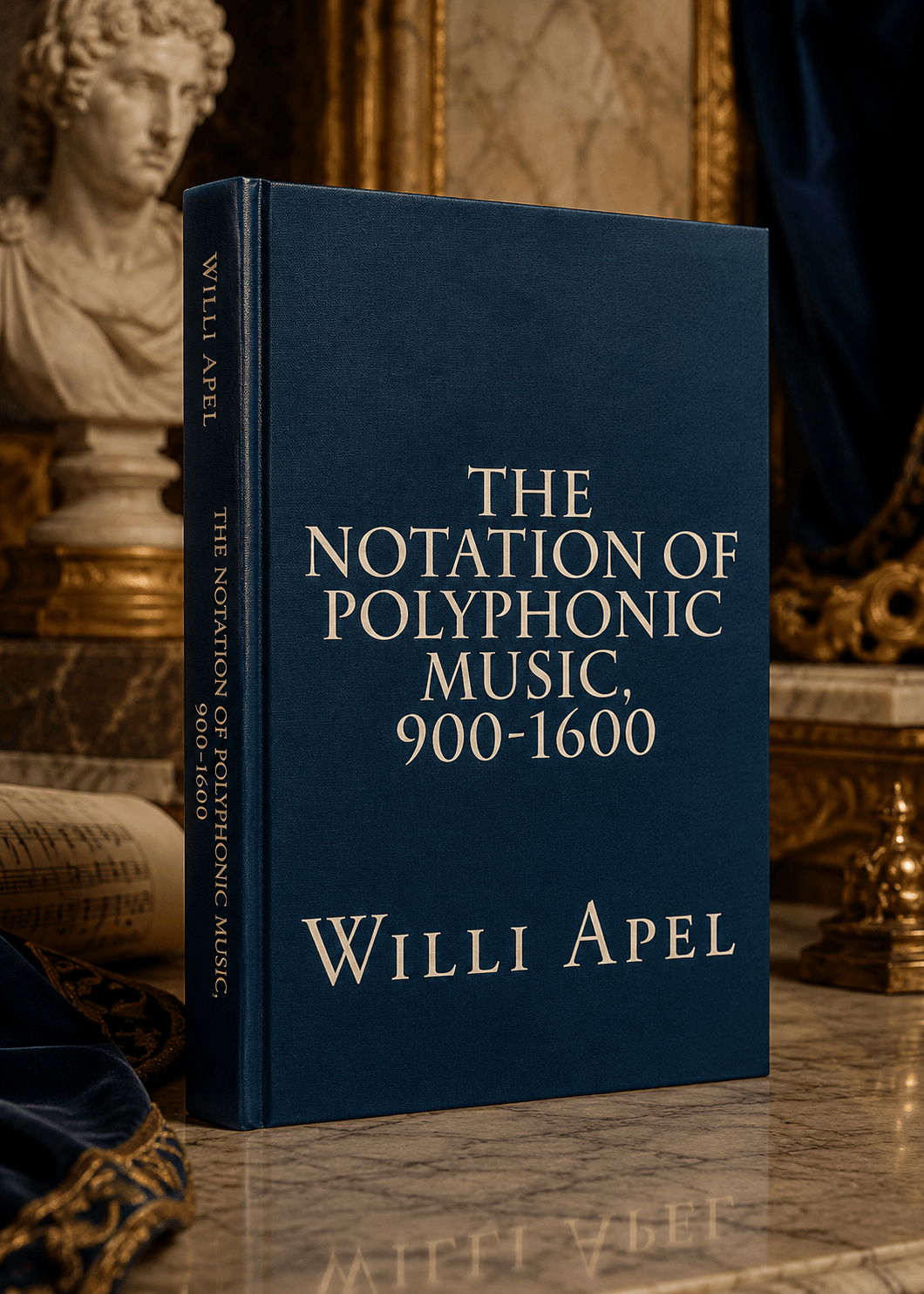
Book Description
The Notation of Polyphonic Music, 900 to 1600 by Willi Apel is a landmark study of medieval notation, Renaissance notation, mensural notation, early polyphonic sources, ligatures, coloration, proportions, and transcription. Published by the Medieval Academy of America, the book gives musicians the tools to understand how prebaroque music was written before modern notation became standard. It is especially valuable for students, performers, editors, theorists, and composers who want to read historical sources directly and understand what early notation reveals, conceals, and demands from the reader.
Who this book is for?
This book is ideal if you want to:
Read medieval notation with real confidence.
Understand mensural notation in depth.
Study Renaissance sources beyond editions.
Improve transcription and editorial skills.
Connect early music theory with practice.
What will you learn?
In The Notation of Polyphonic Music, you will learn how musicians notated polyphony across several centuries, from early medieval practices to the complex notational systems of the Renaissance.
The book helps you understand mensural notation, ligatures, coloration, proportions, rhythmic signs, and the many problems involved in translating historical notation into modern notation. This matters because early music sources do not simply use older symbols for the same modern concepts. They often reflect a different way of thinking about rhythm, meter, voice coordination, and musical time.
You will also learn why transcription is never neutral. A modern edition may look clear, but behind that clarity there are decisions about note values, tactus, perfection, imperfection, alteration, coloration, and proportional relationships. Apel gives the reader a way to see those decisions instead of accepting them blindly.
Book Overview
This review of The Notation of Polyphonic Music, 900 to 1600 can be summarized simply: it is one of the essential books for anyone serious about reading medieval and Renaissance polyphonic sources.
The edition connected with ISBN 9780915651306 is listed as a 520 page paperback published by the Medieval Academy of America in 2012. Historical records show earlier editions of the work, including the 1942 and 1949 versions, which confirms its long standing role in early music scholarship.
As a summary, the book covers the notation of polyphonic music from 900 to 1600, with particular importance for the systems that modern readers often find most difficult: modal rhythm, mensural notation, ligatures, black and white notation, coloration, proportional signs, and transcription practice.
Is it worth it? Yes, if you are serious about early music. This is not a light coffee table introduction to beautiful manuscripts. It is a working reference book. But for the right reader, that is exactly the point. It teaches you to stop treating old notation as decorative mystery and start reading it as a precise, historical musical language.
Topics Covered
Historical development of polyphonic notation from 900 to 1600.
Detailed study of mensural notation and rhythmic values.
Explanation of ligatures, coloration, and proportional signs.
Problems of transcription from manuscript to modern score.
Reading strategies for medieval music and Renaissance sources.
Connections between notation, rhythm, tactus, and performance.
A bridge between musicology, theory, editing, and practice.
About the Author
Willi Apel was a German American musicologist, born in 1893 and died in 1988. He became one of the most influential scholars of early music in the twentieth century, especially through his work on notation, chant, keyboard music, and reference scholarship.
Apel is also widely known as the editor of the Harvard Dictionary of Music, first published in 1944, and for major works such as Gregorian Chant and The History of Keyboard Music to 1700. His scholarship helped bring medieval, Renaissance, and other less commonly taught repertories into a more central place in American music education.
That background matters because The Notation of Polyphonic Music is not only a technical manual. It is part of Apel’s larger project: helping modern musicians approach early repertories through their own sources, signs, structures, and historical logic.
Why this book is worth it
The Notation of Polyphonic Music is worth it because it gives you access to the page before the modern editor has made all the decisions for you.
For performers, the book is valuable because notation affects interpretation. Understanding mensural signs, ligatures, coloration, and proportional relationships can change how you think about rhythm, tactus, phrasing, and ensemble coordination.
For scholars and editors, it remains a serious tool for working with early music sources. The book helps explain why two editions of the same piece may differ and what kinds of notational evidence lie behind those differences.
For composers and theorists, it gives historical depth to the study of counterpoint, modal rhythm, Renaissance polyphony, and musical structure. Notation is not only a way of writing music down. It shapes how musicians imagine, organize, and transmit musical thought.
For readers of Musicus Practicus, this book fits naturally beside counterpoint, partimento, modal theory, and historical composition methods. It reminds us that practical theory begins with the ability to read the signs of the musical language itself.
Buy this Book on Amazon
You can buy The Notation of Polyphonic Music, 900 to 1600 by Willi Apel on Amazon. If you study medieval notation, Renaissance notation, mensural notation, early music transcription, or historical performance, this is a foundational reference to consider.
It is especially recommended if you want to move beyond modern editions and understand how polyphonic music was actually written, transmitted, and read in its own time.
FAQ on this Book
Why is Apel’s book still important?
Apel’s book is still important because it remains one of the classic references for medieval notation, Renaissance notation, and the transcription of early polyphonic sources.
Is it mainly a reference book or a textbook?
It can be used as both, but it is especially strong as a reference book for serious study of early polyphonic notation and transcription.
Does the book cover Renaissance notation?
Yes. The book covers notation up to 1600, making it highly relevant for Renaissance polyphony, white mensural notation, and sixteenth century sources.
Continue Your Journey as a Musicus Practicus
If you desire to stop looking at early music from the outside and wish to step inside the musical mind of the 15th and 16th centuries, there are three distinct ways we can work together to elevate your skills:
- 1-to-1 Musical Apprenticeship: For a personalized, tailor-made path, book private lessons with me. We will work directly on your specific goals, from counterpoint to improvisation, Renaissance and Baroque composition, theory and practice, exactly as a master and apprentice would have done centuries ago.
- Patreon Support & Exclusive Content: Join our growing community of true Musici Prattici on Patreon!
Gain access to exclusive insights, behind-the-scenes materials, and support the ongoing creation of these deep-dive musical analyses.- The Musicus Practicus Academy (MPA): Enroll in my comprehensive on-demand courses.
Start with the free levels, and master the art of Renaissance and Baroque music step-by-step at your own pace.




All Rights Reserved - Richardus Cochlearius 2026