Studies in Historical Improvisation: From Cantare super Librum to Partimenti
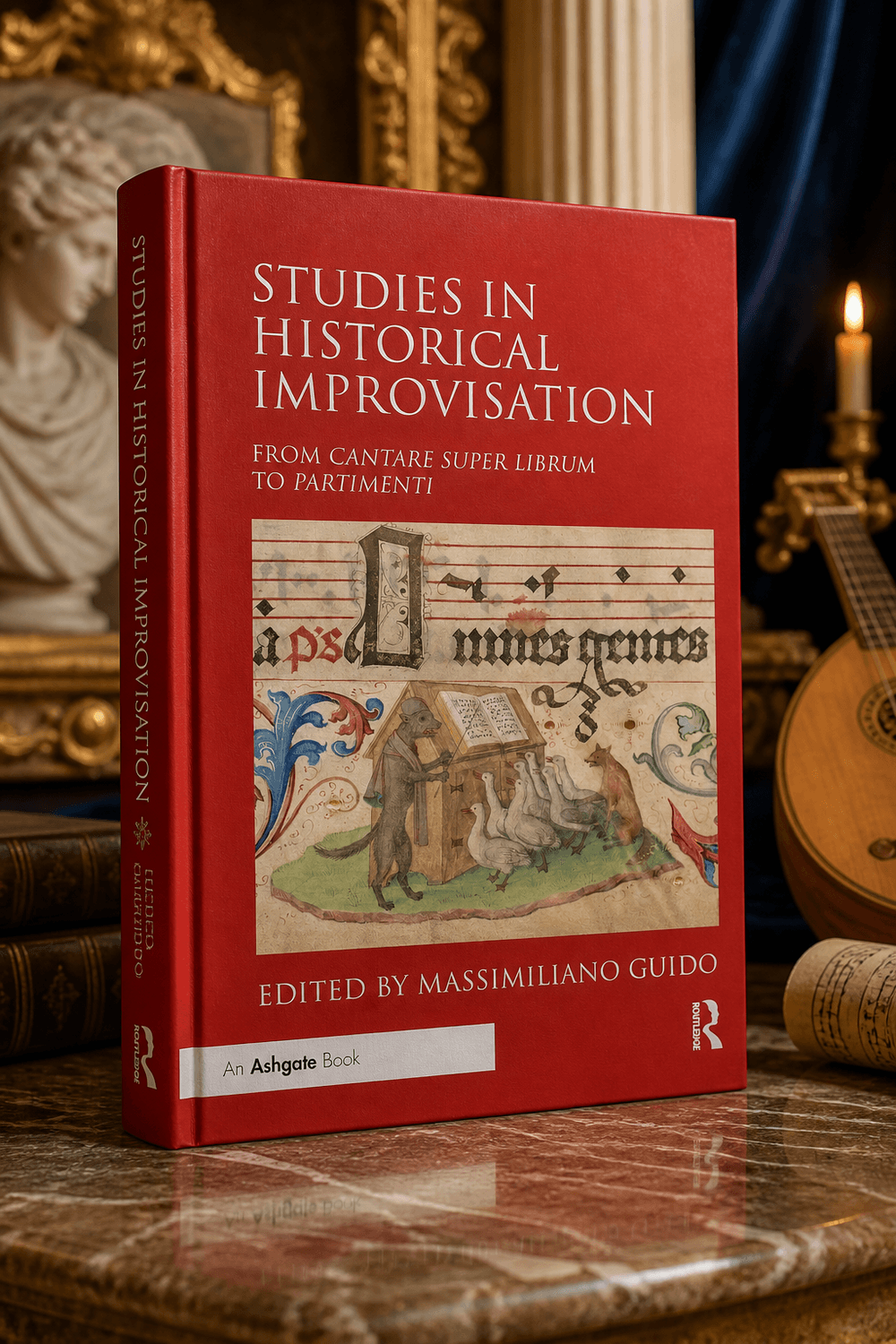
Studies in Historical Improvisation: From Cantare super Librum to Partimenti
Should you buy Studies in Historical Improvisation for your music library?
What makes Massimiliano Guido’s research on historical improvisation unique?
Ready to master the secrets of Renaissance and Baroque improvisation?
Book Description
Studies in Historical Improvisation offers a profound exploration into how Western musicians composed in real time for centuries. Edited by Massimiliano Guido, this collection of essays bridges the gap between the Renaissance practice of cantare super librum and the later Neapolitan partimento tradition. It provides a rigorous academic yet practical framework for understanding how elite performers internalize musical grammar to create complex works spontaneously. This is a vital resource for scholars and practitioners of historical performance practice.
Who this book is for?
This book is ideal if you want to:
Understand the pedagogical roots of Western classical music through the lens of improvisation.
Deepen your knowledge of how counterpoint was taught as a living, oral tradition rather than just a written exercise.
Explore the historical connection between vocal polyphony and instrumental keyboard techniques.
Incorporate authentic historical methods into your own contemporary composition or performance style.
What will you learn?
You will gain a comprehensive understanding of the evolution of improvisational techniques from the late Middle Ages to the 19th century. The text elucidates how the "mind's ear" was trained using specific schemata and formulas. By studying these chapters, you learn to see music theory not as a set of rigid rules but as a flexible toolkit for spontaneous creation.
Book Overview
This volume serves as a bridge between specialized musicology and practical musicianship. It challenges the modern obsession with the fixed "musical work" by highlighting the fluid nature of historical performance. Each contributor brings a unique perspective on how improvisation functioned in different eras, making it one of the most complete reviews of the subject available today.
Topics Covered
The transition from medieval vocal improvisation to the structured polyphonic complexity of the high Renaissance.
Detailed analysis of cantare super librum, explaining how singers improvised additional voices over a given chant.
The role of the organist as a central figure in the development of early modern harmonic thinking.
A thorough investigation into the Neapolitan school and the use of partimenti as a foundation for composition.
The application of rhetoric and gesture in the performance of improvised instrumental fantasies and toccatas.
About the Author
Massimiliano Guido is a highly respected scholar and performer whose work focuses on the intersection of musicology and organ performance. He has dedicated much of his career to uncovering the lost secrets of the Italian keyboard tradition. His expertise ensures that this volume remains grounded in both historical accuracy and artistic reality.
Why this book is worth it
In an era where many musicians feel disconnected from the creative process, this summary of historical methods offers a path back to true artistry. Studies in Historical Improvisation is definitely worth it because it provides the "missing link" in musical education. It transforms your perception of harmony and counterpoint, turning them into active tools for expression rather than passive subjects of study.
Buy this Book on Amazon
You can check the book and its current availability here:
FAQ on this Book
Is this book suitable for beginners in music theory?
While the concepts are advanced, any musician with a basic grasp of harmony will find the historical insights incredibly enlightening and inspiring for further study.
How does this book differ from a standard harmony textbook?
Unlike standard textbooks that focus on part-writing for its own sake, this book focuses on real-time application and the historical context of how these skills were actually used by masters.
Does the book include practical exercises?
The book is primarily a collection of scholarly studies, but the detailed descriptions of historical pedagogy provide a clear roadmap for students to develop their own practice routines.
Continue Your Journey as a Musicus Practicus
If you desire to stop looking at early music from the outside and wish to step inside the musical mind of the 15th and 16th centuries, there are three distinct ways we can work together to elevate your skills:
- 1-to-1 Musical Apprenticeship: For a personalized, tailor-made path, book private lessons with me. We will work directly on your specific goals, from counterpoint to improvisation, Renaissance and Baroque composition, theory and practice, exactly as a master and apprentice would have done centuries ago.
- Patreon Support & Exclusive Content: Join our growing community of true Musici Prattici on Patreon!
Gain access to exclusive insights, behind-the-scenes materials, and support the ongoing creation of these deep-dive musical analyses.- The Musicus Practicus Academy (MPA): Enroll in my comprehensive on-demand courses.
Start with the free levels, and master the art of Renaissance and Baroque music step-by-step at your own pace.



All Rights Reserved - Richardus Cochlearius 2026