Teoria e pratica della musica italiana del Rinascimento
Teoria e pratica della musica italiana del Rinascimento
A practical guide to Italian Renaissance music theory, from Cinquecento treatises to notation, solmization, mensura, modality, and counterpoint.
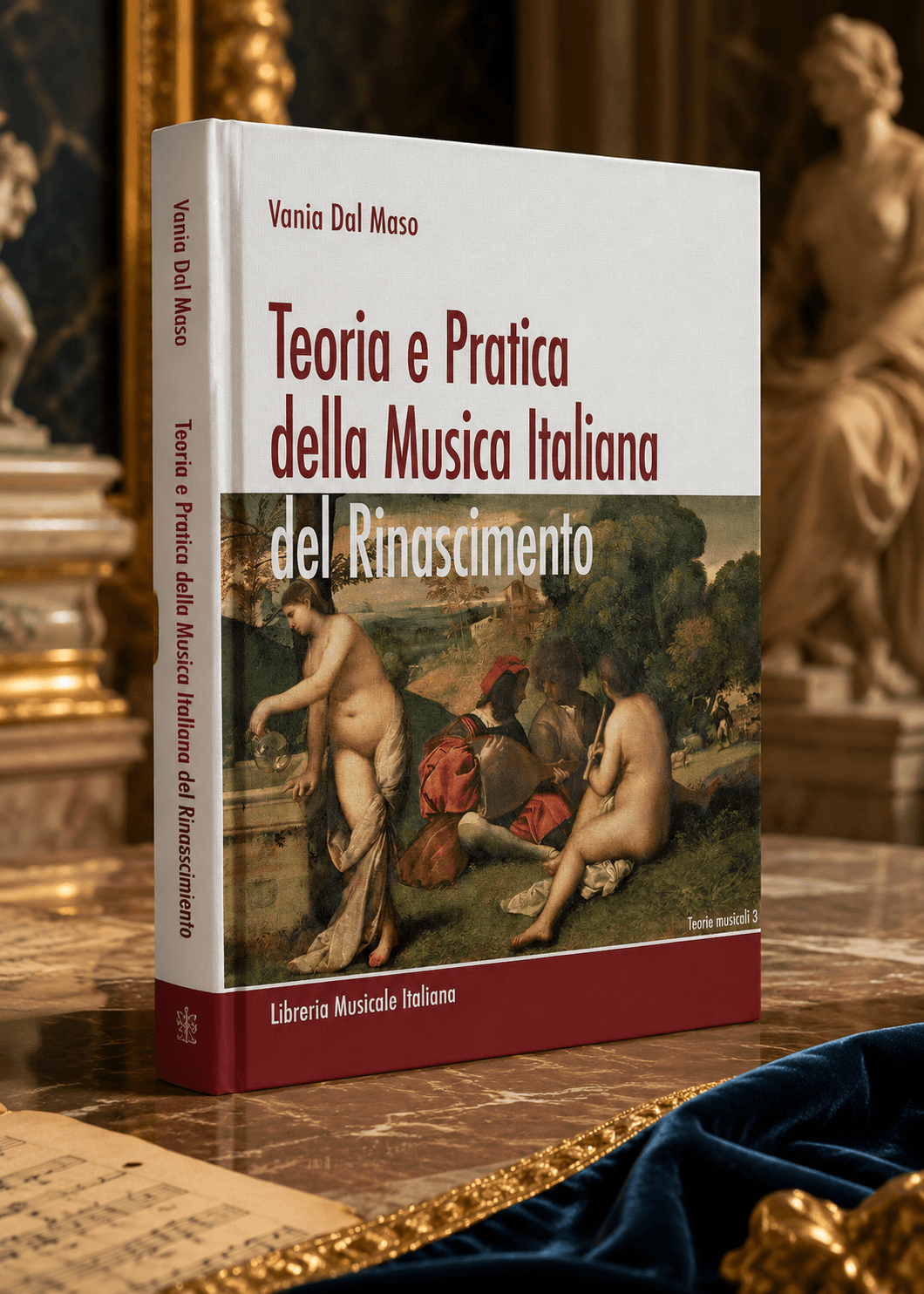
Book Description
Teoria e pratica della musica italiana del Rinascimento by Vania Dal Maso is a detailed and practical guide to Italian Renaissance music theory, Cinquecento treatises, solmization, mensural notation, modality, and counterpoint.
The book explains how sixteenth century musicians learned to read, sing, write, analyze, and perform music, connecting theoretical concepts with real musical practice. It is especially valuable for students, teachers, performers, and composers who want to understand Renaissance music from the inside, not only as a repertory to study, but as a living system of notation, sound, memory, and craft.
Who this book is for?
This book is ideal if you want to:
Study Italian Renaissance theory with structure.
Understand solmization beyond basic syllables.
Read mensural notation with more confidence.
Explore modality through historical sources.
Strengthen counterpoint and analysis skills.
What will you learn?
In Teoria e pratica della musica italiana del Rinascimento, you will learn how sixteenth century musicians, theorists, performers, and teachers understood the foundations of music.
The book helps you connect notation, solmization, mensura, and modality with real musical practice. This is important because Renaissance theory was not just something to memorize. It was a working toolkit for reading, singing, composing, and understanding music.
You will also learn how Italian Cinquecento treatises can still guide modern musicians. Instead of treating old theory as a dusty cabinet of Latin words, Dal Maso shows how these concepts can return to sound, gesture, and performance.
Book Overview
This review of Teoria e pratica della musica italiana del Rinascimento can be summarized clearly: it is one of the most useful books for anyone who wants to understand the grammar of Italian Renaissance music from the inside.
The book was published by LIM Libreria Musicale Italiana in 2017 in the Teorie musicali series. It is based on years of teaching and offers a systematic synthesis of sixteenth century musical treatises, with special attention to their practical value.
As a summary, the book moves through the essential subjects of Renaissance training: the meaning of music and the musician, reading and writing, solmization, mensura, proportions, modality, two voice counterpoint, special signs, and performance situations.
Is it worth it? Yes, especially if you have ever opened a Renaissance score and felt that the notes were clear but the musical world behind them was still speaking another language. This book gives that world a grammar, a vocabulary, and a surprisingly practical voice.
Topics Covered
The role of music and the musician in Renaissance culture.
Reading and writing through Renaissance notation and clefs.
Practical work on solmization, hexachords, and mutation.
Explanation of mensura, proportions, and rhythmic thinking.
Historical study of modality and modal organization.
Foundations of two voice counterpoint and cadential practice.
Special signs, conventions, and performance practice issues.
About the Author
Vania Dal Maso is an Italian musician, scholar, teacher, and specialist in Renaissance music theory, semiography, and historical keyboard instruments. She has taught Semiografia musicale and Teoria della musica rinascimentale at the Conservatorio di Verona.
Her background is especially valuable for this book because she brings together scholarly research, historical sources, performance practice, and practical teaching. In other words, she does not treat Renaissance theory as a glass case object. She treats it as something musicians can actually use.
Dal Maso’s wider work includes studies, editions, concerts, and masterclasses connected with early music and historical instruments. This makes Teoria e pratica della musica italiana del Rinascimento especially relevant for readers who want theory to lead back to sound.
Why this book is worth it
Teoria e pratica della musica italiana del Rinascimento is worth it because it fills a gap between modern music education and Renaissance musical training. Many students learn harmony, analysis, and counterpoint through later categories. This book returns to the categories that sixteenth century musicians actually used.
For composers, it offers a deeper foundation in counterpoint, modality, notation, and historical musical thought. You begin to understand how a Renaissance musician might read, hear, and construct a musical line.
For performers, it clarifies why old notation is not simply modern notation with stranger symbols. Behind mensural notation, solmization, and modal thinking there is a different way of organizing musical time, pitch, and expression.
For readers of Musicus Practicus, this book fits naturally beside partimento, counterpoint, harmony, and historical composition methods. It reminds us that practical theory is not a modern invention. It was the heart of how musicians were trained.
Buy this Book on Amazon
You can buy Teoria e pratica della musica italiana del Rinascimento by Vania Dal Maso on Amazon. If you study Renaissance theory, Cinquecento treatises, solmization, mensural notation, modality, or counterpoint, this is a strong addition to your working library.
FAQ on this Book
Is this book useful for composers?
Yes. It is useful for composers who want to study Renaissance counterpoint, modal thinking, voice leading, and historical composition methods.
Is this book useful for performers?
Yes. Performers can use it to better understand Renaissance notation, solmization, mensura, and performance conventions that are often hidden behind the printed score.
Is this book suitable for conservatory students?
Yes. It is especially suitable for conservatory students, teachers, early music performers, and anyone studying Renaissance theory or historical notation.
Continue Your Journey as a Musicus Practicus
If you desire to stop looking at early music from the outside and wish to step inside the musical mind of the 15th and 16th centuries, there are three distinct ways we can work together to elevate your skills:
- 1-to-1 Musical Apprenticeship: For a personalized, tailor-made path, book private lessons with me. We will work directly on your specific goals, from counterpoint to improvisation, Renaissance and Baroque composition, theory and practice, exactly as a master and apprentice would have done centuries ago.
- Patreon Support & Exclusive Content: Join our growing community of true Musici Prattici on Patreon!
Gain access to exclusive insights, behind-the-scenes materials, and support the ongoing creation of these deep-dive musical analyses.- The Musicus Practicus Academy (MPA): Enroll in my comprehensive on-demand courses.
Start with the free levels, and master the art of Renaissance and Baroque music step-by-step at your own pace.


All Rights Reserved - Richardus Cochlearius 2026