The Performance of 16th-Century Music - Learning from the Theorists
The Performance of 16th-Century Music - Learning from the Theorists
A practical guide to Renaissance performance practice, using sixteenth century theorists to illuminate partbooks, solmization, rhythm, rhetoric, and polyphony.
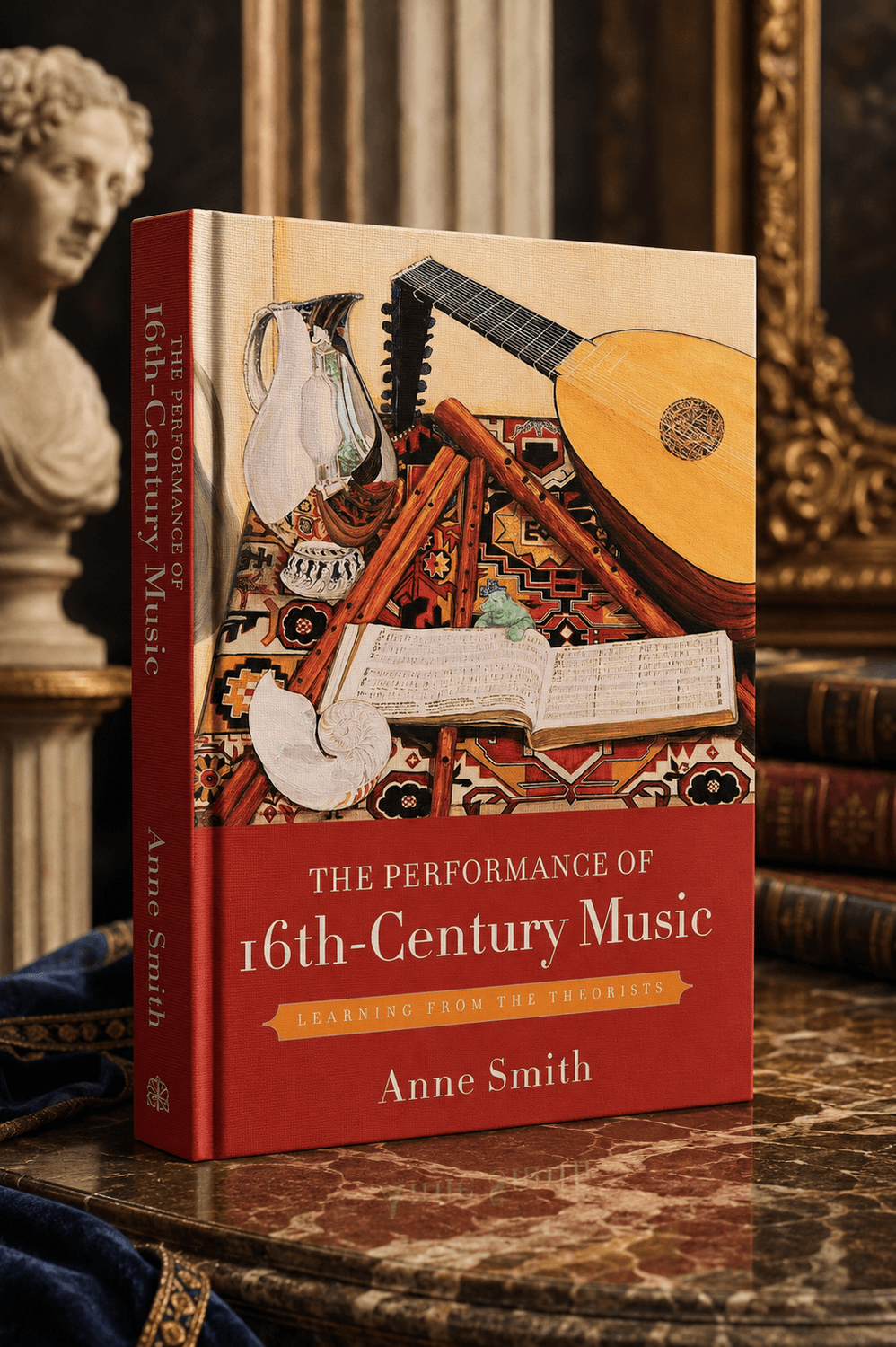
Book Description
The Performance of 16th-Century Music by Anne Smith is a rich and practical guide to Renaissance performance practice, sixteenth century polyphony, solmization, partbooks, choirbooks, rhythmic inequality, and musical rhetoric. Drawing on theorists of the period and decades of practical experience, Smith shows how performers can move beyond modern habits and recover a more historically sensitive way of reading, singing, phrasing, and understanding Renaissance music. It is especially valuable for singers, directors, early music performers, teachers, and composers who want theory to become sound.
Who this book is for?
This book is ideal if you want to:
Perform Renaissance polyphony with deeper insight.
Understand solmization as practical knowledge.
Read partbooks and choirbooks historically.
Explore rhythmic inequality in context.
Connect music theory with live performance.
What will you learn?
In The Performance of 16th-Century Music, you will learn how Renaissance theorists can help modern musicians perform sixteenth century music with greater clarity, expression, and historical awareness.
The book guides the reader through essential areas of Renaissance performance practice, including partbooks, choirbooks, solmization, rhythmic flexibility, and rhetorical structure. These are not decorative historical details. They affect how musicians understand entrances, cadences, text, tactus, phrasing, and the relationship between individual lines.
You will also learn why modern training can sometimes mislead us. Many performers approach Renaissance music with habits formed by later Classical and Romantic repertories. Smith’s book shows how sixteenth century sources can change the way we read the page, hear the texture, and shape the music in performance.
Book Overview
This review of The Performance of 16th-Century Music can be summarized in one sentence: it is a source based performance manual for musicians who do not want to treat Renaissance polyphony as later music wearing older clothes.
The book was published by Oxford University Press in 2011 and is listed with ISBN 9780199742615 and 258 pages. Oxford describes the book as a work that critiques current musical practice in this repertory and provides extensive source material for performers.
As a summary, Smith’s approach is practical, but not simplistic. She uses historical theory to answer performance questions: how did singers read from partbooks? How did solmization shape musical understanding? How flexible could rhythm be? How did rhetoric and structure influence delivery?
Is it worth it? Yes, especially if you perform, conduct, teach, or compose Renaissance style music. This book helps you stop asking only “Are the notes correct?” and start asking “How would this music have made sense to the people who sang it?”
Topics Covered
Historical use of partbooks and choirbooks in performance.
Practical understanding of solmization and pitch thinking.
Study of rhythmic inequality and expressive flexibility.
Links between rhetoric, structure, and musical delivery.
Source based insight into Renaissance theorists.
Tools for performing sixteenth century polyphony.
A bridge between musicology, singing, and practice.
About the Author
Anne Smith is an early music specialist closely associated with Renaissance performance practice, historical flutes, and the practical application of sixteenth century theory. Author information connected with the book notes that sixteenth century music, especially Renaissance flutes, was one of her central interests for almost forty years.
She spent much of her career at the Schola Cantorum Basiliensis in Basel, an important institution for early music and historically informed performance. Sources connected with her work describe her interest in bridging the gap between what sixteenth century theorists wrote and how that knowledge can be applied in performance.
This matters because The Performance of 16th-Century Music is not just a scholarly survey. It comes from someone who understands the performer’s problem: how to turn old theory into singing, breathing, timing, articulation, and musical presence.
Why this book is worth it
The Performance of 16th-Century Music is worth it because it gives performers access to the practical intelligence of Renaissance theorists. Instead of treating theory as something separate from performance, Smith shows that theory can reveal how the music wants to be read, grouped, shaped, and heard.
For singers and ensemble directors, the book offers concrete help with partbook reading, choirbook culture, solmization, tactus, rhythm, and phrasing. It can change rehearsal priorities by making the structure of the music clearer.
For composers, the book is valuable because it reveals the internal mechanics of sixteenth century polyphony. Understanding how performers thought about lines, syllables, rhythm, and rhetoric can make historical composition more convincing.
For readers of Musicus Practicus, this book fits naturally beside counterpoint, partimento, modal theory, and historical composition methods. It teaches the same essential lesson: old musical systems become powerful only when they return to practice.
Buy this Book on Amazon
You can buy The Performance of 16th-Century Music by Anne Smith on Amazon. If you study Renaissance performance practice, sixteenth century polyphony, solmization, partbooks, rhetoric, or historical composition, this is a serious and useful book for your library.
FAQ on this Book
What makes this book different from a normal performance practice guide?
The Performance of 16th-Century Music is built around sixteenth century theorists, so it does not only give modern advice. It asks how historical sources can guide real performance choices.
Does Anne Smith discuss solmization?
Yes. Solmization is one of the key topics of the book, together with partbooks, choirbooks, rhythmic inequality, rhetoric, and structure.
Why are partbooks important in this book?
Partbooks matter because they shape how singers see and understand polyphony. Reading from separate parts can change awareness of line, memory, texture, and ensemble coordination.
Continue Your Journey as a Musicus Practicus
If you desire to stop looking at early music from the outside and wish to step inside the musical mind of the 15th and 16th centuries, there are three distinct ways we can work together to elevate your skills:
- 1-to-1 Musical Apprenticeship: For a personalized, tailor-made path, book private lessons with me. We will work directly on your specific goals, from counterpoint to improvisation, Renaissance and Baroque composition, theory and practice, exactly as a master and apprentice would have done centuries ago.
- Patreon Support & Exclusive Content: Join our growing community of true Musici Prattici on Patreon!
Gain access to exclusive insights, behind-the-scenes materials, and support the ongoing creation of these deep-dive musical analyses.- The Musicus Practicus Academy (MPA): Enroll in my comprehensive on-demand courses.
Start with the free levels, and master the art of Renaissance and Baroque music step-by-step at your own pace.



All Rights Reserved - Richardus Cochlearius 2026